Mobile Menu
Close

News - Nothing but the tooth

{ Practice News }

Showing 9 of 143
Oct 2022
3rd
3rd of October 2022

The Truth About Tooth Wear

Do you know what the one of the most common dental problems is in the United Kingdom? It's not cavities or gum disease. It's tooth wear! Tooth wear can be caused by a number of factors including acid erosion, bruxism (teeth grinding at night ), and poor oral hygiene. In this blog post, we will discuss the causes, treatment, cost, and prevention of tooth wear. We will also answer some common questions about this condition. If you have tooth wear, you must simply read this article.


Sept 2022
13th
13th of September 2022

September 19th - We will be closed to respect the passing of her Majesty the Queen

Monday 19th

We will be closed on Monday 19th September to show our respects for the Royal Family and the passing of our Queen. Queen Elizabeth was a world wide icon and loved in Britain and across the globe. She was a unique individual who devoted her life to public service for 70 years, a feat that is unlikely to be surpassed in our life time. 

We are deeply saddened by her death and our thoughts are with her family at this time. 

We will re open on Tuesday 20th September at 0900. Should you have a dental emergency on Monday, please phone 0207 7311162 and speak with our 24/7 reception team who will advise accordingly.


Mar 2022
17th
17th of March 2022

Enhancing Outcomes Of Non-Surgical Periodontal Therapy With Laser Technology

Article written by Beata Knysak for dentists, dental hygienists and therapists.

Periodontal disease is a major public health concern due to its high prevalence. According to the data severe periodontitis is the sixth-most prevalent condition in the world [1]. In the United Kingdom, 62% of adults under 40 years of age are affected by moderate periodontal disease [2] and throughout the Covid-19 pandemic we have seen an immense increase in the number of patients with periodontal tissue breakdown and tooth loss.

While there is an increase in life expectancy and a significant decrease in tooth loss, periodontal disease puts a burden on the national healthcare systems across the globe.

Although bacteria arising from plaque is the main aetiological factor of periodontal disease, the host’s immune inflammatory response is accountable for the majority of the destructive changes seen in periodontal tissues. Even in healthy periodontium, host immune cells are continuously present, supporting the balance between microbial plaque and the host [6]. Any interactions between the host and oral microbiota will either support the homeostasis or results in dysbiosis within the community of pathogenic microorganisms [7].

Periodontal health-associated commensals are vital in protecting this equilibrium by for example inhibiting the growth of periopathogenic microorganisms. However, quantitative and qualitative changes within subgingival plaque biofilm may lead to disturbed homeostasis, which subsequently leads to the onset of the periodontal disease with various degrees of periodontal tissue breakdown.

This is not a continuous process but alternates between a period of inactivity and aggravation and it can be affected by local and systemic factors [3&4]:

  • Microbial plaque-biofilm burden
  • Patient’s age, ethnicity, genetic predisposition and patient’s immune response
  • Systemic diseases i.e., Diabetes Mellitus, Osteoporosis
  • Tooth morphological factor: i.e., defective restoration, malocclusion, bulbous crowns and dental bridge that unbales the patient to perform an adequate oral hygiene routine
  • Patient’s socio-economic factors i.e., education and access to dental care
  • Life-style choices i.e., smoking, obesity, poor diet, stress, sleeping pattern,
  • Deficiencies in patient’s oral hygiene routine.


If not treated, periodontal disease leads to connective tissue destruction and alveolar bone resorption that eventually results in tooth loss [5]. It negatively affects patient’s chewing function and aesthetics, it is a source of social inequality, and significantly impairs their quality of life.

The main objectives of non-surgical periodontal therapy (NSPT) are to provide the least invasive treatment that gives the patient the best and most predictable outcomes through the promotion of periodontal tissue regeneration and restoration of tooth function. After successful treatment, periodontal ligament (PDL) cells (fibroblasts) migrate and attach to the microorganism free root surface. They proliferate, differentiate and synthesise extracellular matrix proteins to form collagen fibres. It is crucial to obtain newly formed PDL to prevent apical migration of junctional epithelium and to allow regeneration of PDL, cementum and alveolar bone; therefore, the application of laser irradiation has been proposed to allow for the compatibility of root surfaces with regenerative processes.

An increasing number of studies have demonstrated the benefits of adjunctive laser therapy in conventional NSPT due to its reported ability to significantly reduce pathogens, promote healing and to suppress the inflammatory cytokine cascade through to surgical ablation of diseased tissues [8]. As a result of its deeper penetration, diode laser has not only had bactericidal effects but also bio-stimulatory effects on periodontal ligament stem cells, osteoblasts and fibroblasts [9]. The Erbium Chromium: Yttrium Scandium Gallium Garnet (Er,Cr:YSGG) laser, however, allows selective subgingival biofilm and calculus ablation without causing any thermal side effects (carbonisation) or morphologic changes to the root surface to allow the attachment of these cells [10]. Also, when compared with conventional hand instrumentation, Er,Cr:YSGG laser therapy was not only found to promote PDL fibroblast cell migration and attachment, but it also increased the number of cells that differentiate in periodontal regeneration [11,12,13].

Although in the treatment of periodontal disease, surgical interventions (with the use of osseous graft material, barrier membranes or application of a biologically active material) deem to have more predictable outcomes than conventional NSPT, they may however, possess multiple shortfalls including high cost, painful healing and post-operative complications. Also, with regard to the application of local or systemic antibiotic there are multiple side-effects including antibiotic resistance, gastrointestinal complications or drug interactions.


Dec 2021
21st
21st of December 2021

Christmas Opening Hours 2021

It's the 21st of December and officially the shortest day of the year! Brighter days ahead.

This year, we will close at 12pm 23rd December for our Christmas break. Emergency appointments will be available on 29th December from 0900-1200. Please e mail us or call on the day for an appointment. If you need advice whilst we are closed, please also send an e mail, leave a WhatsApp on 07508 663942 or leave a message with our offsite reception who are available 24/7. Once this message has been received, one of our dentists will be informed and they will get back to you as soon as possible, even on Christmas Day! 

We resume normal opening times from 4th January.

Have a very merry Christmas and a Happy New Year!


Dec 2021
7th
7th of December 2021

Mouth Cancer Self Check

The Self Check Tests- Early Diagnosis Is Key

There are a number of areas to check for mouth cancer. The Mouth Cancer Foundation has provided a superb self check kit which we have provided below. This will take 2 minutes and could be crucial in spotting early signs of mouth cancer. If in doubt, please book an appointment with your dentist.

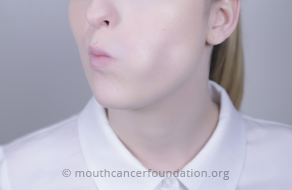
FACE
 

Face


Look at the whole face. Are there any swellings you haven’t noticed before? Inspect your skin. Has anything changed recently? Have moles become larger or started to itch or bleed? Turn your head from side to side. This stretches the skin over the muscles making lumps easier to see.

NECK
 

NeckNeckNeck


Run the fingers under your jaw and feel along the large muscle either side of neck using the balls of your fingers. Are there any swellings? Does everything feel the same on both sides?

LIPS
 

LipsLips


Using your index, middle fingers and thumb to feel the inside of your mouth. Pull your upper lip upwards and bottom lip downwards to look inside for any sores or changes in colour. Use your thumb and forefinger to feel around and inside your lips checking for any lumps, bumps or changes in texture.

GUMS
 

GumsGums


Use your thumb and forefinger on the inside and outside of the gum working your way around the gum to feel for anything unusual.

CHECK YOUR CHEEKS
 

Check your CheeksCheck your Cheeks


Open your mouth and pull your cheeks away, one side at a time, with your finger to look inside. Look for any red or white patches. Use your finger in the cheek to check for ulcers, lumps or tenderness. Repeat on the other side. Your tongue can be helpful to locate sore areas, ulcers or rough patches.

TONGUE
 

TongueTongueTongue


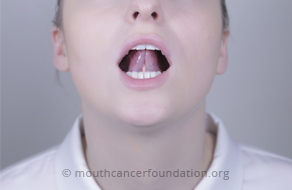
Gently pull out your tongue and look at one side first and then the other. Look for any swelling, ulcer or change in colour. Examine the underside of your tongue by lifting the tip of your tongue to the roof of your mouth.

FLOOR OF MOUTH
 

Floor of Mouth


Lift your tongue up and look underneath then look at the floor of your mouth for any colour changes that are unusual. Gently press your finger along the floor of your mouth and underside your tongue to feel for any lumps, swellings or ulcers.

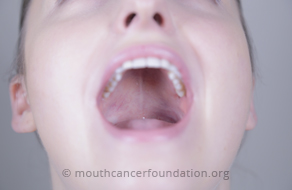
ROOF OF MOUTH
 

Roof of Mouth


Tilt back your head and open your mouth wide to check the roof of your mouth. Look to see if there are changes in colour or ulcers. Check for changes in texture with your finger.

Make a note of anything unusual. If you have recently had a cold, sore throat, ulcer or swollen glands, bitten or scolded yourself for example, these should heal within 3 weeks. If you have any concerns visit your dentist or doctor to see if you need specialist advice.


Dec 2021
2nd
2nd of December 2021

Risk Factors & Causes of Mouth Cancer - What To Know

We don’t know what causes most mouth cancers. However, there are several factors that are likely to increase your risk.

Up to 90% of all mouth cancers are linked to lifestyle factors.

This means that with a few small changes, you can help cut your chances of developing mouth cancer.

If you do not stop or reduce the things that might put you at greater risk, it is important that you self check at home and regularly visit your dentist.

The below causes are linked to mouth cancer.


Dec 2020
24th
24th of December 2020

Merry Christmas!

We are now closed for the Christmas break and will re open on the 30th December for emergency appointments from 0900-1400. This will be by appointment only using our online booking facility. To make an appointment please use the link below:-

Tagged with:   Emergency dentist

May 2020
14th
14th of May 2020

When Will Dentists Open For Emergency Treatment In London?

One of the most pressing issues in dentistry at the moment is when will we be able to re-open for emergency dental appointments. It is has been nearly 2 months since we were forced to close our doors. Despite what the Government may say, on the 25th March the Chief Dental Officer stated:

1. All routine, non-urgent dental care including orthodontics should be stopped and deferred until advised otherwise.

2. All practices should establish (independently or by collaboration with others) a remote urgent care service, providing telephone triage for their patients with urgent needs during usual working hours, and whenever possible treating with:
 
a. Advice
b. Analgesia
c. Antimicrobial means where appropriate

3. If the patient’s condition cannot be managed by these means, then they will need to be referred to the appropriate part of their Local Urgent Dental Care system. These new arrangements will involve providers working with defined groups of patients to manage urgent dental care needs only, with appropriate separation arrangements in place to manage patient status and professional safety

By all accounts, this ordered an immediate halt to all dental services within primary care. In my local area, Fulham, SW6 London, I have not been informed of a local urgent dental care centre that I am able to refer extreme emergency cases to. The advice given by various bodies ( I shall not name them) was to call 111. Frankly, this may have been almost acceptable in the early stages of the pandemic but NOT 7 weeks after the statement. Thousands of patients across the country have been left in pain and distress with the advice to take pain killers and anti biotics, which as we all know, are only effective when infection is present. 

In this respect, I spent many hours reviewing the literature to provide some evidence-based analysis on how we can protect ourselves, our patients and get back to work after lockdown. If you are interested in reading this article, it was published by Dentistry and the link is here.

The summary involves 10 key points which are easy to implement and allow us to get back to work as soon as possible. These include:
 

1. Careful screening of patients pre treatment

2. Alteration of patient appointment times/ flexible time frames

3. Reception screening, social distancing measures.

4. Consider clean air systems within reception areas and surgeries such as those involving air suctioning pre filters, HEPA filters, carbon filters and UV lamps

5. Reducing aerosol

6. Always use high volume suction or HVA

7. Use rubber dam or consider additional isolation systems such as Isovac/Isolite

8. Provide assistants to hygiene/therapists for HVA

9. Enhanced PPE especially for those at greater risk of Covid 19

10. Extra time for cleaning and disinfecting surfaces including areas not previously cleaned

These are measured points that will go a large way to help our profession back to work and re-start the process of opening our dental clinics in London and across the UK.

Should you have a dental emergency, please do not hesitate to contact me. Although we cannot see you right now, I can try to help as best as I can remotely and arrange an appointment as soon as we can re-open. 
 

www.progressivedentistry.co.uk
 

t 0207 7311162 
 

e info@progressivedentistry.co.uk 
 

Article written by Dr Nissit Patel


Apr 2020
21st
21st of April 2020

Managing Orthodontic Emergencies at Home during Lockdown

If you are undergoing orthodontic treatment at this present time, I can appreciate that it is probably quite a worry about when your next appointment may be. After all, orthodontic treatment is all about seeing progress for teeth straightening and it is unlikely the next adjustment or review appointment will be for some time yet.

However, it is important to stay positive and remember the fact that things will return to some level of normality in the near future and that teeth can always be straightened despite the time delay!

On that note, I thought it would be useful to discuss orthodontic emergencies and how to manage them at home during lock down. The most common types of problems encountered listed below with some helpful tips on how to manage them at home.